
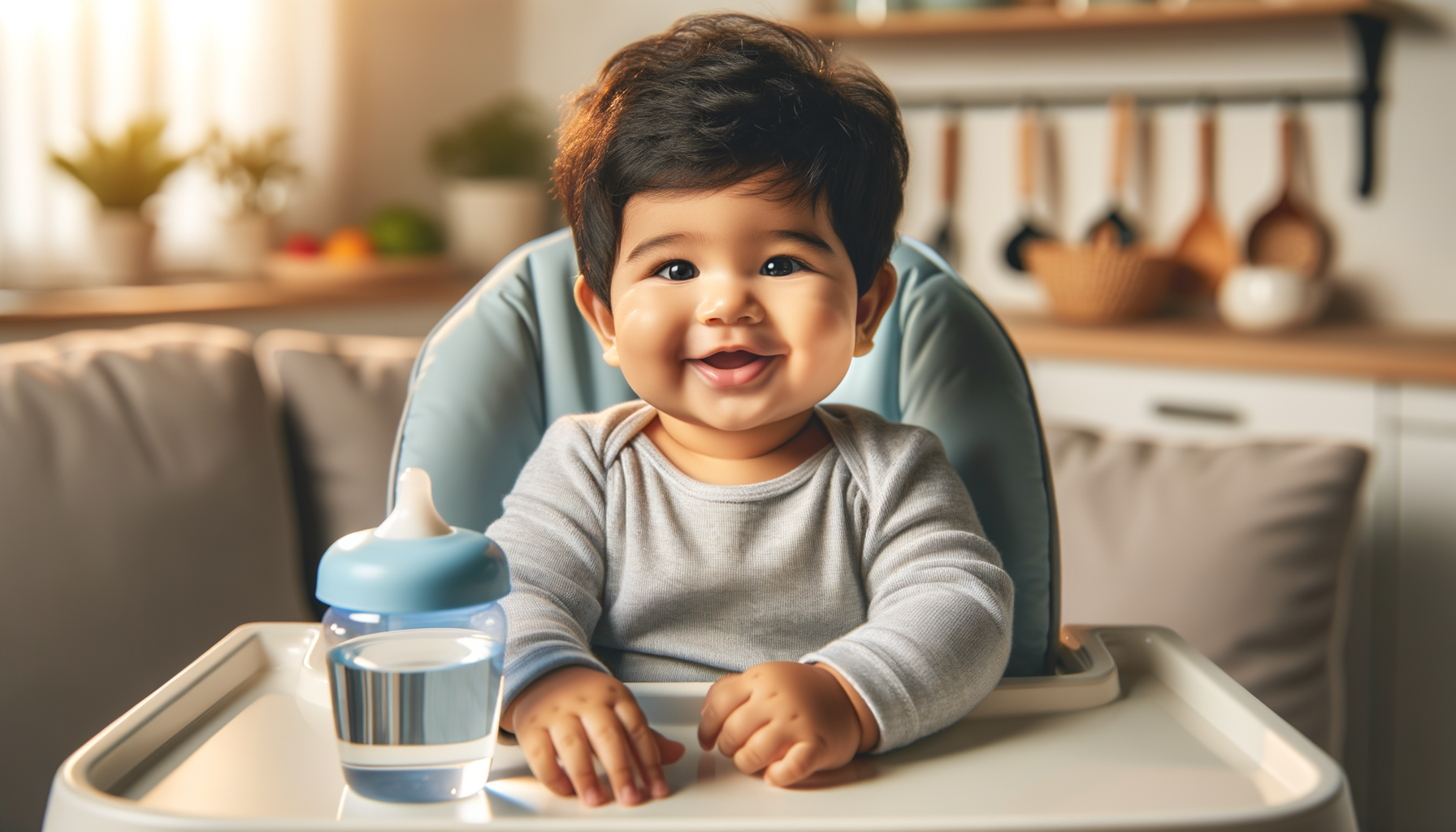
As a mum of two lively little ones, I remember keenly the moment I wondered, “When should I start to give water to my baby?” You want everything to be just right for your child, and water seems so simple—yet for babies, timing truly matters. Even with a second child, I found myself double-checking advice, so you’re definitely not alone if you’re asking this! Here’s everything I learned (and wish I’d known sooner) about safely introducing water to your baby between 6 and 12 months.
Why Wait to Give Water to Your Baby?
In newborn days, breast milk or formula delivers all the hydration and nutrition your baby needs. Offering water too early can fill little tummies without giving the essential calories and nutrients babies need to grow. For the first six months, exclusive breastfeeding or formula feeding is recommended by trusted sources like the HealthyChildren. So, if you’re still in those early months, you can rest easy—your baby is getting everything necessary from milk alone.
When Is It Safe to Start Giving Water to My Baby?
This milestone often addresses the common question of when babies can safely drink water without compromising their nutrition.
The key milestone is around 6 months. That’s usually when babies begin eating solid foods, and their little digestive systems are ready for minimal amounts of water. Here are a few crucial points:
- Babies don’t need water before 6 months unless medically advised
- From 6 months, you can offer cooled, boiled water with solid meals
- Continue breast milk or formula as the main drink until at least 12 months
I found that both my children were more curious about my glass of water at this age, so it felt natural to offer a sippy cup alongside meals. Start with small sips—a few teaspoons at a time are enough.
How Much Water Does a Baby Need Between 6 and 12 Months?
Understanding when babies drink water also includes knowing how much is safe at different ages.
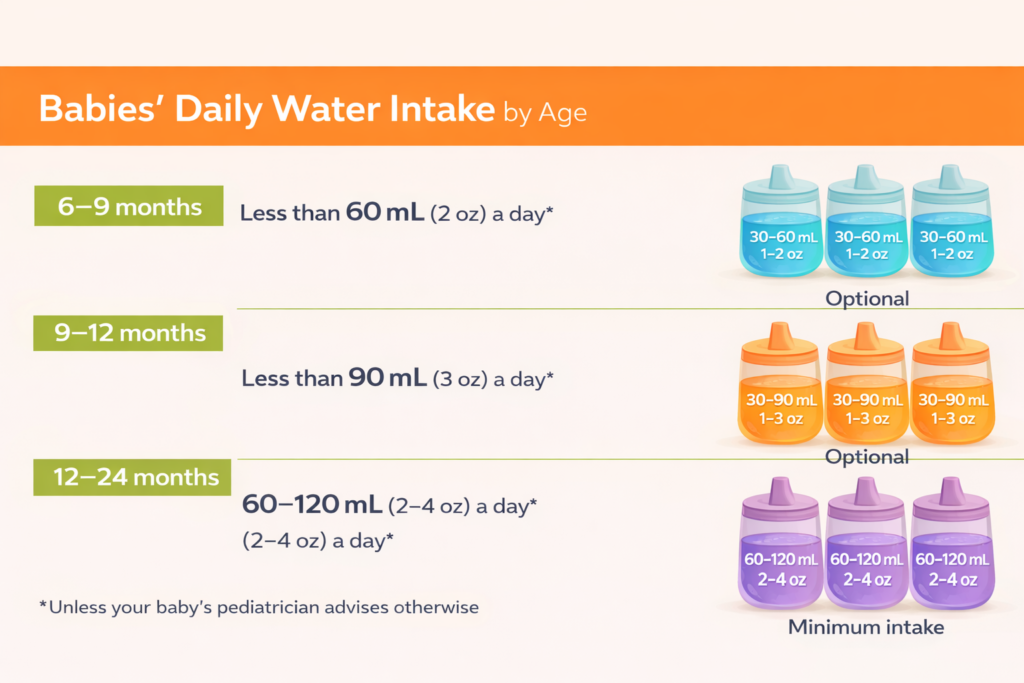
This is one of the most common concerns, and I had the very same question when my oldest started solids. Babies don’t need much water during this stage. A few sips with meals (about 60–120 millilitres, 2–4 ounces, per day) is plenty. Over time, your baby will gradually increase their intake, especially as certain foods are introduced.
Remember:
- Water is for practice, not for replacing milk feeds
- Too much water can fill up tiny tummies, leaving no room for nutrient-rich milk or food
- Babies will drink more as solid foods become their main source of calories, usually after 12 months
Best Ways to Offer Water to Your Baby
From my trial and error moments (so many dropped cups!), I’ve picked up a few practical ideas for making water a happy addition:
- Use a soft-spout sippy cup or open cup for easy sipping
- Offer water at meal times, not between, to avoid interfering with milk feeds
- Keep water at room temperature or slightly cool (not too cold for little tummies)
- Boil tap water and let it cool until your baby turns 12 months
When my daughter first tried water, she played with it, then she drank! But with patience, she got the hang of her special cup. Every baby finds their rhythm, so don’t worry if your little one is mostly exploring at first.
Should I Ever Offer Water Between Feedings?
For healthy babies eating solid foods, water is best paired with meals. There are circumstances, however, such as hot weather (over 25°C or 77°F) or mild constipation, where a few extra sips between feeds might help. I always kept extra water handy during summer walks. Still, milk remains the priority drink up to the first birthday.
If you’re ever unsure—especially if baby has a fever or signs of dehydration (like dry nappies or sunken eyes)—always check with your healthcare professional first. For daily, normal hydration needs, breast milk or formula is best.
Safety Tips for Giving Water to Babies
Whenever I get questions from other mums in my circle, safety is always top of mind. Here are simple ways to keep water introduction safe:
- Always boil tap water and let it cool for babies under 12 months, to reduce bacteria risk
- Never add sugar, juice or sweeteners—plain water is all they need
- Avoid bottled or mineral water, as it may have too much sodium
- Offer water from a cup, not a bottle, to encourage healthy habits
For extra peace of mind, I always double-check with our family doctor before introducing anything new. Trusting your instincts (plus getting a little reassurance from professionals) goes a long way.
Common Questions About Water and Baby Health
What Happens if My Baby Drinks Too Much Water?
Excess water can dilute important salts in a baby’s body. This is called water intoxication, and though very rare, it’s good to be aware. Signs include irritability, drowsiness, or swelling. Stick to sips with meals until your child’s first birthday.
Is It Safe to Offer Ice or Chilled Water in Summer?
I remember worrying about this during our first heatwave. Lightly cooled water is fine, but avoid very cold water for little tummies and always check that any ice is made from safe, boiled water.
What Type of Cup Is Best for Giving Water?
I’ve tried many! A soft-spout sippy or child-sized open cup encourages healthy drinking skills. Choose something easy for your baby to grip. Avoid bottles for water, as they can affect teeth.
Signs Your Baby Is Ready for Water
If you’re unsure your baby is really ready, look for these typical signs:
- Sitting up well with little support
- Interested in watching you drink or reaching for your cup
- Starting to eat fruit, vegetables and other solids
- Has good head control
Babies progress at their own pace. I noticed my son was far keener to try water than his big sister, so don’t worry if your baby isn’t showing much interest yet.
Recap: Water and Baby, 6–12 Months
Navigating baby’s hydration really can be simple. From around 6 months, offer cooled, boiled water with meals, a few sips at a time. Keep breast milk or formula as their main drink until 12 months. Every child is a little different, but with small, sensible steps, introducing water can be a positive and pressure-free experience.
Knowing when babies drink water helps parents avoid common mistakes and support healthy hydration habits.
If you ever have concerns or questions, your healthcare provider is your best ally.
For even more on your baby’s journey through solids and hydration, check out our related posts on introducing foods after 6 months (from the NHS).
Parenting is all about progress, not perfection, and every sip is a step forward!