
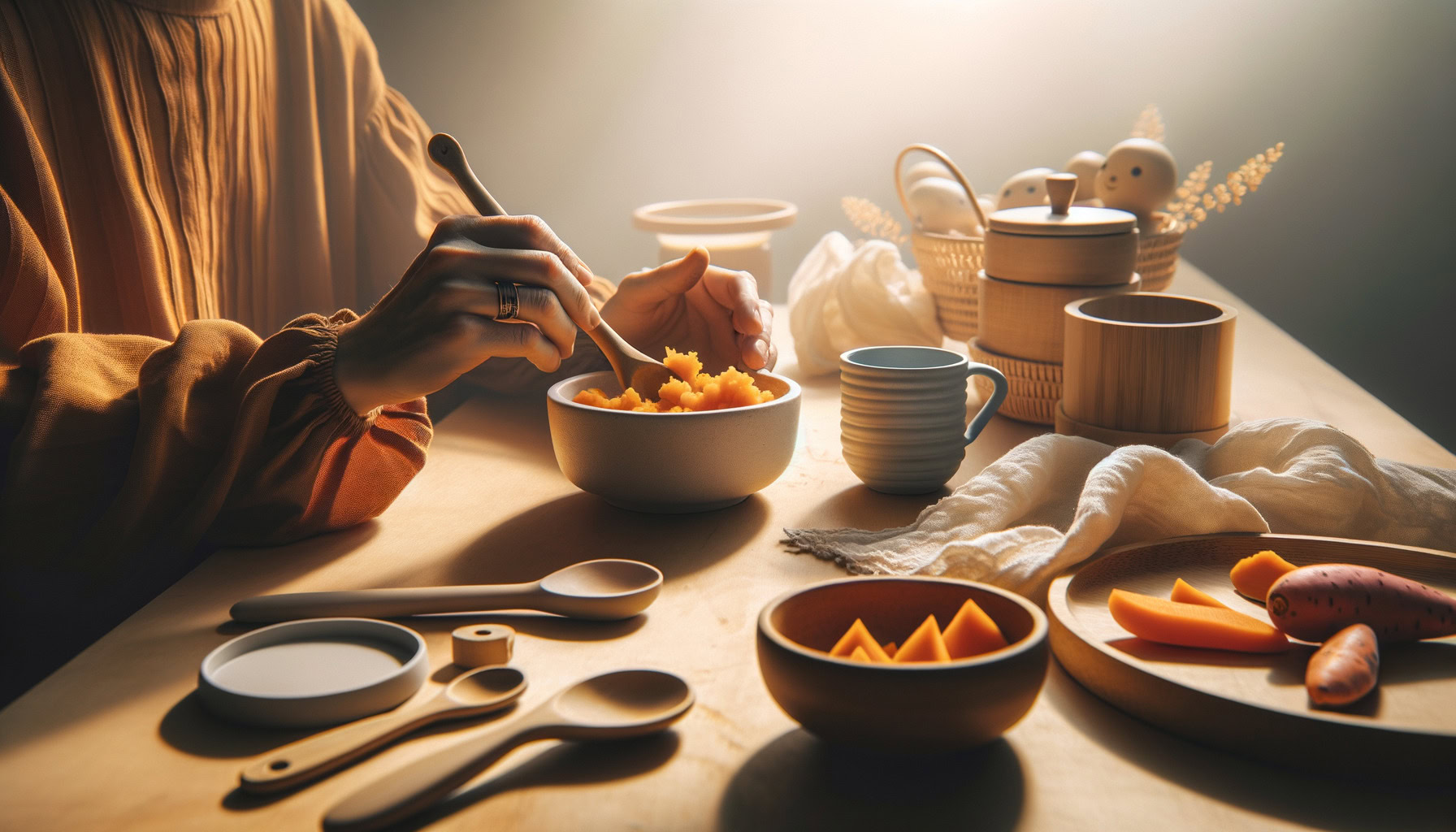
I’ll never forget the first time my eldest tried sweet potato. Half landed on the high chair, a quarter on the dog, and the tiniest amount in his mouth. But over the weeks, sweet potato became one of our safe haven foods — mild, naturally sweet, packed with goodness, and soft enough for toothless gums. If you’re staring at a knobbly orange root and wondering where to start, you’re in good company. Here’s how I prepare sweet potato for baby, step by step, with plenty of shortcuts and zero perfection required.
Why Start With Sweet Potato for Baby?
Honestly, I love sweet potato for baby because it ticks all the parental boxes: easy to cook, naturally sweet, creamy texture, and packed with iron, potassium, beta-carotene, plus slow-release carbs for all that tiny growing. Both my kids went through picky phases and sweet potato nearly always worked. Oh, and it’s almost impossible to mess up!
Introducing nutritious solids is a big new chapter. For more on what to expect through 6-12 months, check out my post on what to expect in months 0-6 — yes, those wild newborn days do end! And if you’re wondering when it’s safe to hand over the water cup, here’s a simple guide on when babies can drink water.
When Can Babies Have Sweet Potato?
Most babies can start having pureed or very soft sweet potato from around 6 months, when they’re showing signs of being ready for solids. That’s the age both mine started sampling food — first on a pre-loaded spoon, then bravely (and very messily) grabbing their own handfuls.
For the nitty gritty on timing and readiness, here’s my real-mum take on when to start solid foods for babies.
According to the NHS, sweet potato is a great first food because it mashes, bakes, or roasts super soft, and it’s rarely allergenic. Still, try a few spoonfuls first and watch for any reaction (rash, vomiting, tummy discomfort). If allergies run in the family, chat to your health visitor, GP, or paediatrician first.
Easy Ways to Prepare Sweet Potato for Baby
Every family has their own approach, but these are my go-tos for sweet potato for baby whether you’re doing purees, finger foods, or a mix of both:
1. Simple Sweet Potato Puree (6 months+)
- Peel and chop a sweet potato into chunks
- Steam for 10-12 minutes (or microwave in a bowl with a splash of water, covered, until fork-tender)
- Mash with a fork or blend with some cooled boiled water or your usual milk
- Serve warm or room temp — preloaded spoon works for early eaters
Amanda’s tip: Sometimes I’d mix in a tiny bit of breast milk or formula to make it extra smooth.
2. Roasted Sweet Potato Wedges (7-8 months+)
- Peel (or scrub well) and cut into thick sticks, about the size of your pinky
- Toss in a splash of olive oil, roast at 200°C (392°F) for 20-25 minutes, turning halfway
- Let cool slightly before serving so they’re soft, but not hot
Super handy for babies starting to practice self-feeding. My youngest loved gnawing on these and making a glorious mess. Keep them unseasoned — tiny tummies don’t need extra salt yet.
3. Sweet Potato Mash Mix-Ins
- Combine with a little cooked lentil, mashed peas, or soft scrambled yolk for a protein and flavour boost
- Or stir in mashed avocado to cool it down fast
Plenty more combo inspiration in my post on introducing allergenic foods to babies.
4. Sweet Potato Pancakes (9 months+)
If your baby is tackling lumpy textures or finger foods, mash sweet potato with an egg and a tablespoon of flour, drop small dollops into a frying pan with a dash of oil, and flip after a minute or two. I made these so often during teething. They’re soft, sweet, and easy to hold.
Texture Tips: Puree, Mash, or Finger Food?
It’s totally normal for babies to change their minds on texture every other week. Both mine swung wildly between wanting to self-feed and demanding super-smooth mash.
- 6-7 months: smoother purees or really soft mash, offered via spoon
- 7-9 months: more lumpy mash or soft wedges
- 9-12 months: soft chunks, pancakes, or bite-sized cubes
If your baby’s turning up their nose, try changing the texture or temperature. My youngest refused any “mushy” foods cold, but would wolf them down if I microwaved them for just 10 seconds.
For more on when teething might affect eating, check out my signs of teething guide.
Safety and Storage for Sweet Potato for Baby
- Always let food cool to just-warm before serving — babies’ mouths are super sensitive
- If batch-cooking, freeze portions in ice cube trays so you can defrost a little at a time
- Reheat till piping hot (over 75°C/167°F), then allow to cool before serving
- Discard any leftovers that’ve been at room temp for over 2 hours
You can keep cooked sweet potato in the fridge for up to 48 hours. I usually batch-make mash or wedges, then freeze – life-saving for those days when nothing else is ready!
Fussy Baby? Sweet Potato Troubleshooting
Some days, the dog ate more dinner than my son did. Totally normal. Here’s what’s worked for us:
- Mix sweet potato with a veggie your baby already likes (mine was obsessed with carrot)
- Warm it slightly if your little one’s sensitive to cold food
- Offer as a pre-loaded spoon so they can grab and control it
- Stay relaxed — lots of babies take 10 or more “tries” before liking a new flavour
And if you need extra reassurance, my post on why nights feel harder for new parents might be just the hug you need.
Nutritional Benefits of Sweet Potato for Baby
Sweet potato isn’t just a crowd-pleaser — it’s full of vitamins A, C, fibre, and potassium. According to the World Health Organization, introducing a wide variety of vegetables early helps set up healthy eating habits that last. Plus, its natural sweetness makes it super appealing to tiny taste buds.
Real Mum Q&A: Your Sweet Potato Questions Answered
“Do you leave the skin on?” I usually peel for under 8 months, but scrub the skin well and leave it on for roasting once chewing is better. Soft cooked skin is edible, but watch for large chewy bits.
“How do you know if the pieces are soft enough?” They should smush easily between your fingers. If you wouldn’t eat it without chewing, baby shouldn’t either!
“Help, my baby is constipated, does sweet potato help or make it worse?” Sweet potato has fibre, but too much can firm up stools — balance with pureed pear or a little water if your health visitor says it’s okay. More on this in my tips about baby stomach size by age.
Bottom Line: Sweet Potato for Baby is Brilliant — and Real Life is Messy
Every mealtime in our house is some balance of hope, nutrition, and a LOT of wiping up. Sweet potato for baby is an easy win, a gentle intro to solids, and forgiving if you’re learning as you go — like all of us.
If you need more meal inspiration for this age group, try this post on the best first foods for your one year old.
No fancy kit, no complicated recipes, no stress if half gets dropped on the floor. You’ve got this — and you’re definitely not alone.