

The early months with a newborn are full of surprises. Just when you think you’re settling into a rhythm, your baby suddenly gets fussy, drools nonstop, or seems to chew on anything they can grab. If you’re wondering, ‘Is my baby teething already?’, you’re not alone. As a mum of two, both my kids started teething earlier than I expected—one just after three months! It’s a wild ride, but you don’t have to navigate it alone.
What Is Teething and When Does It Start?
Teething is when your baby’s first teeth, also known as milk teeth or baby teeth, start pushing through their gums. While most of us expect it closer to six months, some babies start as early as three months, and others not until after their first birthday. There’s a huge range of ‘normal,’ but most parents typically see the first tooth between four and seven months.
Common Teething Signs in Babies Aged 0–6 Months
Recognising teething isn’t always straightforward—especially during the 0–6 month phase when everything is new. Here are some signs to look out for:
• Increased drooling (expect a lot of soggy clothes!)
• Excessive chewing or gnawing on hands, toys, or even you
• Fussiness or irritability, particularly at night
• Red or swollen gums, sometimes with a visible bump under the surface
• Interrupted sleep (as if newborn sleep wasn’t tricky enough)
• Rubbing their face or ears (though ear pulling can sometimes be a sign of an ear infection—always chat with your healthcare provider if you’re unsure)
Interestingly, some symptoms often blamed on teething—like fever or diarrhoea—don’t actually have strong scientific backing. Babies might have a very slight temperature rise, but any fever above 38°C (100.4°F) should be checked out by your doctor.
Typical Teething Timeline for 0–6 Month Olds
Every baby is unique, but here’s a look at what you might expect in those first six months:
• 0–3 months: Teething is rare but possible. If you notice all the signs, it could be starting early, but always rule out other causes of discomfort.
• 4–6 months: The front lower teeth (central incisors) often start to break through.
• 6+ months: Most babies get their first tooth sometime after six months, but plenty start before then!
For a helpful chart, check out the American Dental Association’s eruption timeline.
What Teething Feels Like for Babies and Parents
Teething can be uncomfortable—for babies and parents alike. My firstborn drooled so much we joked she’d need her own towel. She also wanted to nurse all the time, probably for comfort. My second baby was more irritable and found relief by chewing. Don’t worry if your baby seems to prefer one method of soothing over another; each child really is different.
How to Help a Teething Baby 0–6 Months
You want to do everything possible to ease your little one’s discomfort, especially since they can’t tell you what’s bothering them. Most paediatricians recommend:
• Giving a clean, damp washcloth or soft silicone teether cooled in the fridge (never frozen) to chew on
• Rubbing their gums gently with a clean finger
• Offering extra cuddles and comfort feeds—sometimes breastfeeding or bottle-feeding helps
• Wiping away drool often to prevent skin irritation
• Using a bib for frequent drooling (it can save you a lot of outfit changes!)
Remember: Never use teething gels that contain benzocaine or lidocaine in infants under two years, as these aren’t considered safe.
Teething Toys That Can Help Soothe Sore Gums
When babies start teething, gentle pressure on the gums can help reduce discomfort. Soft silicone teething rings designed for chewing can be useful during this stage, especially for babies who don’t tolerate cold teething rings.
Recommended product:
Nuby Nananubs Banana Massaging Toothbrush
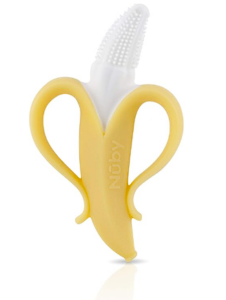 The Nuby Nananubs Banana Teether is a popular option for babies around 3–6 months. Its soft silicone design is gentle on sore gums, and the banana shape makes it easy for babies to hold and chew safely.
Do Teething Necklaces or Amber Beads Work?
As tempting as some teething trends seem, safety always comes first. Neither the NHS nor the American Academy of Pediatrics recommends teething necklaces or amber beads. They pose risks of choking and strangulation. It’s best to stick with safe, one-piece teethers made for babies.
Soothing Sore Gums: Other Gentle Home Remedies
Every baby responds differently to teething comfort methods. Here’s what worked for us and what other parents swear by:
• Chilling breast milk or formula, then offering it in a bottle for added relief
• Letting your baby gnaw on a soft (age-appropriate) spoon
• Providing extra gentle cuddles, carrying in a sling or carrier
If your baby refuses to feed, is inconsolable, or has a high fever, always call your paediatrician to rule out other causes.
When Teething Symptoms Might Be Something Else
It’s so easy to blame every little cry or night waking on teething, especially in those first six months. But sometimes fussiness is due to:
• Growth spurts
• Illness, colds, or ear infections
• Tummy troubles or reflux
If anything feels off, trust your parental instinct. In my experience, it’s always better to get reassurance from your healthcare team than worry alone.
Caring for Gums and New Baby Teeth
Oral health matters from the very beginning—even if your baby has gums. Key tips:
• Clean gums gently with a clean, damp cloth after feeds
• As soon as a tooth pops through, use a soft baby toothbrush and a smear of fluoride toothpaste
• Avoid putting your baby to bed with a bottle, as this can cause early tooth decay
What to Expect After the First Tooth Arrives
After that first tooth, more usually follow every month or two. By your baby’s first birthday, you might see two, four, or even eight little teeth! More drooling and night waking are normal with each new tooth eruption.
When to Visit the Dentist
Experts recommend booking your baby’s first dental visit by their first birthday, or within six months of the first tooth appearing. Early visits help establish good habits and identify issues promptly.
Final Thoughts on Teething in the First 6 Months
Teething feels like one of those big milestones that hits earlier and differently for every baby. Some breeze through while others struggle. If you’re in the thick of it, remember lots of cuddles, gentle teethers, and patience can help—just like they did for both my children. Don’t be afraid to reach out for advice or reassurance if anything worries you.
Teething in these early months can challenge even the calmest parent, but you’re doing better than you think!