
Hello, I’m Amanda—a mum of two, and if there’s anything I remember from those first hazy months, it was being worried about whether my babies were getting enough milk. If you’re scratching your head, wondering just how much milk (or formula) your 2-day-old’s tiny tummy can actually hold, I promise you’re not alone. Understanding baby stomach size is one of those parenting mysteries that’s a lot less complicated than it sounds once you know a few basics. Let me walk you through what I learned about those teeny tummies, how that affects feeding, and what you really need to keep in mind for a happy, healthy baby.
Why Baby Stomach Size Matters in the Early Months
The size of your baby’s stomach changes dramatically in the first half year—and so do their feeding needs. It can feel overwhelming at first to figure out if your baby is getting enough, too much, or not quite the right amount. Reassuringly, your baby was born with some pretty smart instincts that help regulate their own intake. But knowing what’s normal with baby stomach size can help ease those worries, so you aren’t second-guessing every feed.
Some reasons understanding baby’s stomach size is helpful:
- Prevents overfeeding or unnecessary worry about underfeeding
- Helps set realistic expectations, especially if you’re breastfeeding and can’t see exact ounces
- Aids in understanding hunger cues
- Makes burping and spit-up less stressful because you know what their tummy can (and can’t) handle
For more support on feeding basics, see our detailed post on feeding cues and tips for newborns.
How Big Is a Newborn’s Stomach?
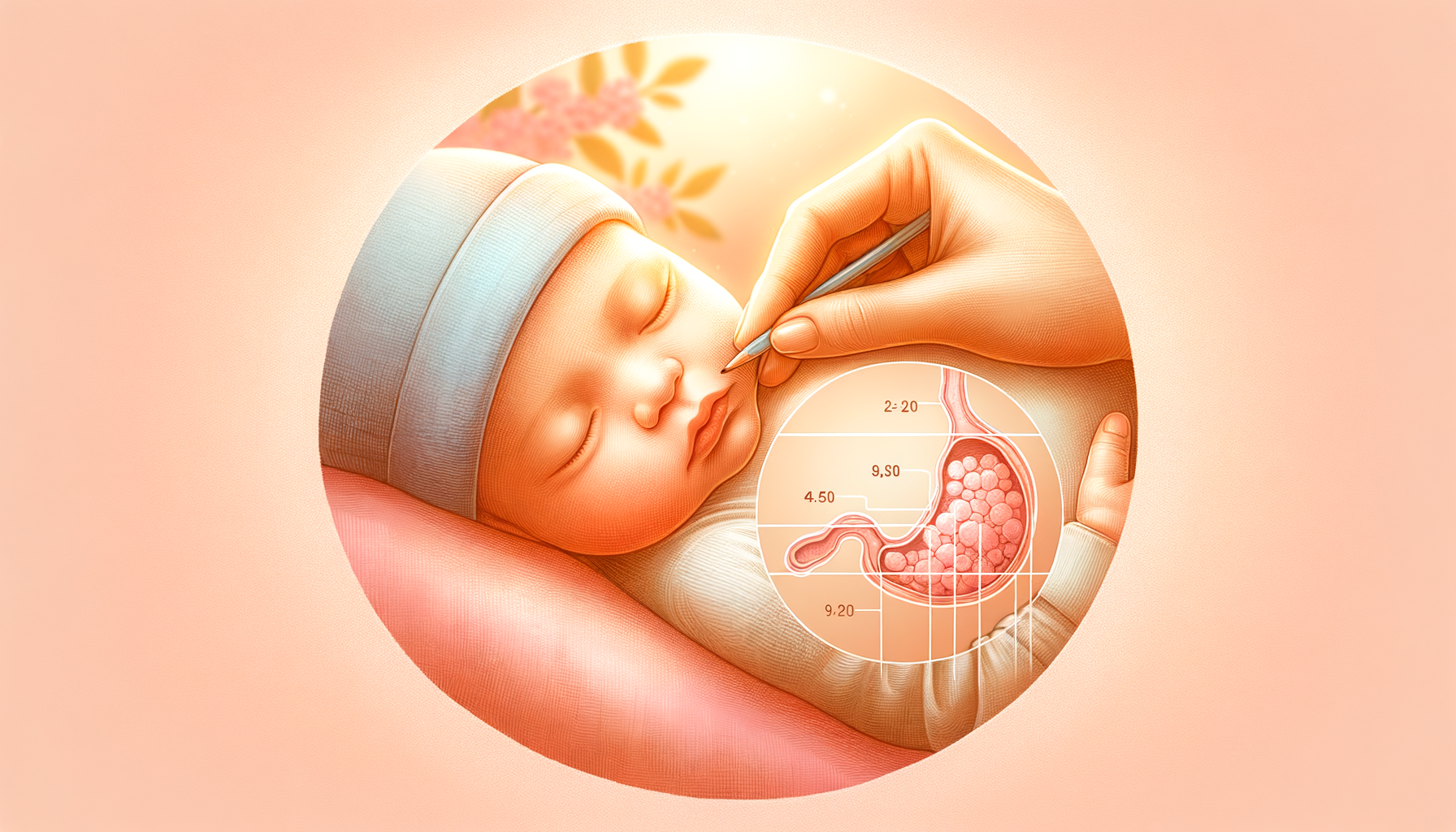
Here’s where most parents start with a shock: at birth, a baby’s stomach isn’t much bigger than a cherry. That’s about 5–7 millilitres (about 1–1.5 teaspoons). So if your newborn seems only to take a dribble in each feed on Day 1, that’s completely normal!
- Day 1: Size of a cherry (5–7 ml or 1–1.5 teaspoons)
- Day 3: Size of a walnut (22–27 ml or 4–5 teaspoons)
- Week 1: Size of an apricot (45–60 ml or 3–4 tablespoons)
- 1 Month: Size of a large egg (80–150 ml or 5–10 tablespoons)
The growth is incredible in just the first week alone. But even at a month, it’s still much smaller than a young child’s stomach.
If you’d like to see these sizes visually, check out the brilliant graphics and medical references from Stanford Medicine’s newborn feeding resources for accurate images.
Why Does the Baby’s Stomach Grow So Quickly?
Newborns are designed to feed often, but in very small amounts. Their fast-growing stomach means they need those frequent snacks rather than one big meal. As you respond to their cues, your milk supply (if breastfeeding) or bottle feeding routine naturally adjusts.
From my own experience, those first few days felt a little relentless—especially the cluster feeds—but reminding myself that my daughter’s stomach was the size of a cherry somehow made those wake-up calls more bearable. Nature really does know best!
When to Feed According to Baby Stomach Size
Instead of focusing on ounces or millilitres, I found it easier to pay attention to signs that my baby was hungry or full. Here’s what to watch for:
Early hunger cues:
- Sucking on hands
- Turning head towards the breast or bottle (rooting)
- Opening and closing the mouth
Fullness cues:
- Slower sucking
- Turning away from the breast or the bottle
- Relaxed, open hands
- Falling asleep shortly after feeding
Feeding on cue works best for most newborns with such tiny stomachs. If you’re ever unsure about taking breaks or offering more, trust those cues—they’re usually more reliable than any chart!
Check our post on understanding newborn hunger cues for a deeper dive.
How Frequently Should Babies Feed in the First 6 Months?
Babies in the first weeks have small stomachs and need to feed often, both day and night, for both breastfed and formula-fed babies.
- Newborn (0–2 weeks): 8–12 feeds per day, sometimes more
- 2–6 weeks: 7–10 feeds per day
- 6 weeks onwards: 6–8 feeds per day (average)
Each baby is unique, so these are just guides. As they approach 6 months, babies can generally go a bit longer between feeds, but still need consistency.
Don’t forget, breast milk and formula contain all the fluid and nutrition they need at this age—no need for water or juice just yet.
Spit-Up, Burping, and Baby Stomach: What’s Normal?
If you’ve ever fretted over a little milk coming back up, join the club. Spit-up is common, not usually a problem, and often due to the small, immature baby’s stomach and developing digestive tract.
My tips for managing spit-up:
- Hold the baby upright after feeds for about 10–20 minutes
- Burp gently in the middle and after a feed
- Avoid tight waistbands around the tummy
- Don’t panic about small, milky dribbles—try to judge if your baby seems happy and is gaining weight
Trust your instincts. If spit-up ever seems forceful or your baby is not gaining weight, talk to your healthcare provider. For more on this, see our guidance on normal spit-up and when to worry.
Common Myths About Baby Stomach Size
Myth 1: Babies should finish a bottle every time.
Truth: Babies have different appetites, just like adults! Forcing them to finish can cause discomfort.
Myth 2: Bigger bottles mean less frequent waking.
Truth: Overfilling a bottle doesn’t stretch out sleep, and can actually cause more spit-up and discomfort.
Myth 3: A small baby’s stomach means not enough milk.
Truth: Newborns are perfectly designed for frequent small feeds, so frequent nursing or bottle feeds are totally normal.
When to Be Concerned About Baby Feeding
Most parents worry at some point, but there are a few signs that deserve a quick call to your paediatrician:
- Fewer than 6 wet nappies in 24 hours after day 5
- Dark urine, dry mouth, or absence of tears when crying
- Persistently vomiting (not just spitting up)
- Lethargy, weak cry, or little interest in feeding
If you’re not sure, always reach out. I’ve done so more than once—it’s never a silly question!
Building Healthy Habits for Your Baby’s Growing Stomach
As your baby grows, their stomach expands, and they will naturally take in more per feed. This usually means feeds get a bit further apart, and sleep gradually gets better (thank goodness!). Trust the process and remember:
- Babies are excellent at signalling hunger and fullness
- Avoid pressuring them to finish bottles or breastfeeds
- Trust the growth curve—not just daily numbers
For more information on healthy feeding routines, explore our article on establishing baby routines for 0–6 months.
Conclusion: Trusting Your Baby—and Yourself—With Baby Stomach Size
Every baby is a little different, but knowing about baby stomach size truly helped me relax during those foggy newborn days. Those tiny tummies are perfectly built for frequent, small feeds, and paying attention to their cues (not just numbers!) can save a lot of stress. You know your baby best—and you are absolutely enough, just as you are.
If you’re curious or worried, bookmark this article and come back to it for reassurance. For more trusted advice for life with babies and toddlers, browse the latest feeding and baby care tips on BabyThingsTips. You’ve got this, mama (or papa)! If you have questions or want to share your experience, please leave a comment below—I’d love to hear from you!